Originally posted on August 31, 2026 @ 2:51 am
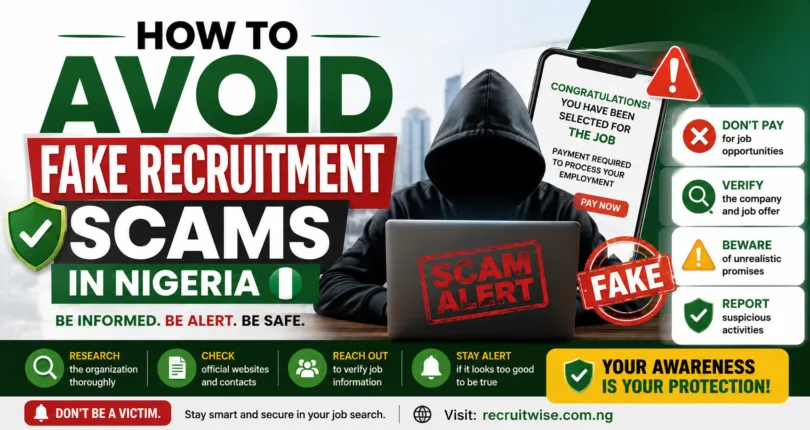
How to Avoid Fake Recruitment Scams in Nigeria 2026: Finding a genuine job in Nigeria has become highly competitive. Unfortunately, fraudsters have taken advantage of this situation by creating fake recruitment advertisements that target desperate job seekers. Every year, thousands of Nigerians lose money, personal information, and valuable time to fake recruitment schemes because they are so desperate to get recruited and start a career.
Whether you are applying for government recruitment, private company vacancies, graduate trainee programmes, or international jobs, knowing how to avoid fake recruitment scams in Nigeria is one of the most important skills every job seeker should have.
This guide will completely explain how recruitment scams work, the common warning signs, practical ways to verify job offers, and what to do if you become a victim of a recruitment scam in Nigeria.
What Are Fake Recruitment Scams?
Fake recruitment scams are fraudulent schemes where criminals pretend to recruit employees on behalf of government agencies, multinational companies, banks, oil companies, NGOs, or private organizations.
Their main objectives include:
- Stealing money through fake application fees
- Collecting personal information for identity theft
- Selling fake employment forms
- Installing malware through suspicious websites
- Defrauding applicants with fake training programmes
These scams have become more sophisticated in recent years, making it essential for applicants to verify every opportunity before proceeding.
Why Recruitment Scams Are Increasing in Nigeria Every Day
Several factors have contributed to the rise in recruitment fraud.
| Factor | Explanation |
|---|---|
| High unemployment | Large numbers of applicants make scams easier |
| Social media | Fake vacancies spread rapidly |
| Fake websites | Fraudsters create professional-looking portals |
| Messaging apps | WhatsApp and Telegram groups circulate fake job alerts |
| Urgency | Victims rush to apply without verification |
Scammers often target fresh graduates, NYSC members, unemployed professionals, and individuals seeking government employment.
Common Types of Recruitment Scams in Nigeria
Based on my research, the following are the common types of recruitment scams Nigerian job seekers face currently:
1. Fake Government Recruitment
Scammers impersonate popular government agencies and announce fake recruitment exercises. Examples include fake recruitment advertisements claiming to be from:
- Civil Service
- Customs
- Immigration
- EFCC
- NDLEA
- FRSC
- Federal Ministries
They usually request payment before processing applications.
2. Fake Bank Recruitment
Fraudsters create fake recruitment portals using the names of well-known commercial banks. Applicants receive emails claiming they have been shortlisted after paying “processing” or “documentation” fees.
3. Fake Oil and Gas Jobs
Oil companies are common targets because they are associated with high salaries. Scammers advertise fake vacancies and request payments for:
- Medical examinations
- Security clearance
- Interview materials
- Employment documentation
4. Fake International Jobs
Many fake recruiters promise employment in:
- Canada
- United Kingdom
- United States
- Australia
- Qatar
- United Arab Emirates
Victims are asked to pay visa processing or work permit fees before any official employment documentation exists.
5. Fake NGO Recruitment
Popular NGOs are also impersonated to deceive applicants. Applicants receive fake interview invitations requesting registration or orientation fees.
Top Warning Signs of Recruitment Scams
Recognizing these warning signs can save you from financial loss.
| Warning Sign | Risk Level |
|---|---|
| Application fee required | Very High |
| Interview only on WhatsApp | High |
| Unrealistically high salary | High |
| No official company website | High |
| Gmail or Yahoo email addresses | High |
| Immediate employment without interview | Very High |
| Poor grammar in official communication | Medium |
| Requests for ATM details | Extremely High |
| Pressure to pay immediately | Very High |
| Fake offer letters with spelling errors | High |
If multiple warning signs appear together, the recruitment is likely fraudulent.
How To Avoid Fake Recruitment Scams In Nigeria 2026
Below are proven ways to protect yourself.
1. Never Pay Recruitment Fees
One of the most important rules is simple:
Legitimate employers do not sell job opportunities.
You should never pay for:
- Employment forms
- Interview invitations
- Recruitment processing
- Offer letters
- Documentation
- Employment slots
If money is requested before employment, treat it as a major warning sign.
2. Verify the Official Recruitment Portal
Always confirm vacancies through the organization’s official website. Do not rely solely on:
- Facebook posts
- WhatsApp messages
- Telegram groups
- Unknown blogs
- Screenshots
Visit the organization’s verified recruitment portal directly.
3. Check the Official Email Address
Professional organizations usually communicate using official domains. Examples:
Good:
Suspicious:
Free email services are rarely used for official recruitment.
4. Research the Company
Before applying:
- Search Google
- Read company reviews
- Visit LinkedIn
- Check social media pages
- Look for physical office addresses
A company with no online presence deserves careful investigation.
5. Be Careful with Social Media Job Posts
Not every job advertisement on social media is genuine. Before applying:
- Verify the source
- Confirm the company page
- Check comments
- Search for previous recruitment announcements
Many scammers disable comments to prevent victims from warning others.
6. Protect Your Personal Information
Never share:
- ATM PIN
- BVN
- OTP
- Internet banking credentials
- Passwords
- Debit card details
Employers never require these during recruitment.
7. Avoid Suspicious Links
Fraudsters often create fake websites that closely resemble official portals. Always examine:
- Website spelling
- Domain extension
- Security certificate (HTTPS)
- Company branding
Even a slight spelling difference may indicate fraud.
8. Confirm Interview Locations
Real companies conduct interviews at:
- Corporate offices
- Hotels for large recruitment exercises
- Official conference centres
Avoid interviews held in:
- Residential apartments
- Empty buildings
- Restaurants
- Unidentified locations
9. Verify Phone Numbers
Search unfamiliar recruitment phone numbers online. Many scam numbers have already been reported by previous victims.
10. Trust Your Instinct
If something feels suspicious, pause and investigate. Scammers rely on urgency.
They may claim:
- Limited slots remain
- Payment deadline expires today
- Immediate processing required
These tactics pressure victims into making poor decisions.
Genuine Recruitment Process vs Fake Recruitment
| Genuine Recruitment | Fake Recruitment |
|---|---|
| Official website | Random websites |
| No application fee | Requests payment |
| Professional HR communication | Poorly written messages |
| Competitive selection | Guaranteed employment |
| Official interview | WhatsApp interview |
| Transparent process | Secretive process |
| Company email | Gmail or Yahoo email |
Red Flags in Fake Recruitment Messages
Examples include:
- Congratulations! You have already been selected.
- Pay ₦10,000 for documentation.
- Your employment is guaranteed.
- Send your ATM details.
- Limited vacancies. Pay immediately.
- Processing fee must be paid today.
- Interview takes place only on WhatsApp.
Professional employers rarely use these phrases.
How to Verify a Recruitment Advertisement
Follow this simple checklist before applying.
| Verification Step | Action |
|---|---|
| Company website | Visit official portal |
| Contact email | Confirm official domain |
| Phone number | Verify publicly |
| Office address | Search Google Maps |
| Recruitment news | Compare with reputable news sources |
| Application fee | Ensure none is requested |
| Interview process | Confirm official invitation |
Completing these checks significantly reduces the risk of fraud.
What To Do If You Have Been Scammed
If you suspect you have fallen victim:
- Stop communicating with the scammers.
- Avoid making additional payments.
- Save screenshots and payment receipts.
- Contact your bank immediately.
- Report the incident to relevant law enforcement agencies.
- Change passwords if you shared login information.
- Warn others by reporting fake advertisements online.
Quick action increases the chances of limiting financial losses.
Best Practices for Safe Job Hunting in Nigeria 2026
To improve your safety while searching for jobs:
- Apply only through verified recruitment portals.
- Use trusted recruitment websites.
- Keep your CV updated.
- Avoid unofficial agents.
- Follow verified company social media pages.
- Subscribe to official recruitment updates.
- Verify every offer before accepting it.
Being cautious is far better than recovering from fraud.
Conclusion
Understanding How To Avoid Fake Recruitment Scams In Nigeria has become essential for every job seeker in 2026. Recruitment fraud continues to evolve, but most scams share common warning signs such as requests for payment, fake websites, unofficial email addresses, and unrealistic promises.
Always verify recruitment announcements through official channels, never pay to secure employment, and protect your personal and financial information. A legitimate employer values transparency and professionalism throughout the hiring process.
Taking a few extra minutes to verify a job advertisement can save you from significant financial loss and disappointment. Stay informed, remain cautious, and encourage others to verify recruitment opportunities before applying.
Frequently Asked Questions (FAQs)
Is it legal for employers in Nigeria to charge application fees?
No. Legitimate employers generally do not require applicants to pay application, interview, or employment processing fees.
How can I know if a recruitment website is genuine?
Check the official company website, verify the web address, confirm that it uses HTTPS, and compare the recruitment announcement with information published through the organization’s official communication channels.
Do government recruitment exercises require payment?
No. Genuine government recruitment exercises are typically free. Any request for payment should be treated as a warning sign.
Can recruitment interviews be conducted on WhatsApp?
Some employers may use messaging platforms for initial communication, but a recruitment process conducted entirely through WhatsApp, especially with requests for payment, is highly suspicious.
What information should never be shared with recruiters?
Never disclose your ATM PIN, debit card details, one-time passwords (OTP), online banking credentials, or any sensitive financial information.
What should I do if I receive a suspicious job offer?
Do not make any payment. Verify the offer through the employer’s official website or customer support channels before responding.
Can scammers create websites that look like real company portals?
Yes. Fraudsters often design convincing fake websites that closely resemble legitimate recruitment portals. Always inspect the website address carefully and confirm it through official sources.
What is the safest way to apply for jobs in Nigeria?
Apply directly through official company websites, verified recruitment portals, and trusted employment platforms. Always verify vacancies before submitting your application.



Leave a Comment